International
In the Shadow of War, Libya’s Ailing Oil Industry Gets No Relief
Published on : 2020-05-22
.jpeg)
Bloomberg - The revival of Libya’s oil industry looks even less certain following recent setbacks suffered by Khalifa Haftar, the commander trying to take over the last swaths of the country outside his control.
Forces aligned with Fayez al-Sarraj, the prime minister recognized by the United Nations, this week overran the Watiya air base near the capital, Tripoli, in a major blow to Haftar.
The Russian-backed general effectively rules the country’s eastern and southern regions, and has been trying to conquer Tripoli in the west for more than a year. He halted almost all the OPEC member’s crude production in January to pile pressure on Sarraj to surrender.
Haftar has long complained that Tripoli, which receives all of the nation’s oil revenue via the central bank, distributes the money unfairly and to the disadvantage of the historically marginalized east.
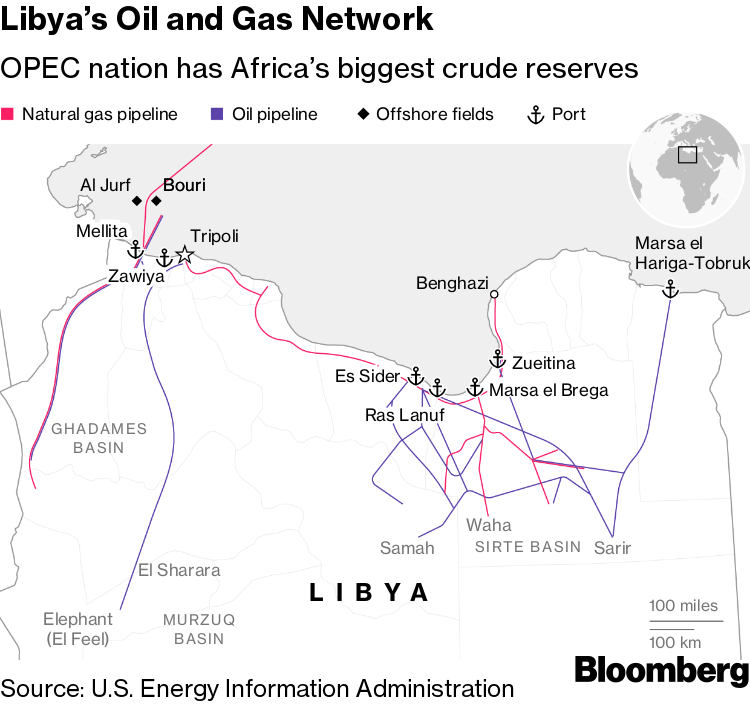
Sarraj, who’s supported by Turkey, may now be in a position to attempt to restart the western fields of Sharara, Libya’s biggest, and El-Feel. But Haftar’s past actions suggest he won’t end his blockade of oil ports or allow other fields to open unless he gets a deal giving him a greater proportion of Libya’s energy receipts.
“There may be attempts to restart southwestern oil fields but sustained production is something else,” said Bill Farren-Price, a director at Canadian consultancy RS Energy Group. “The bulk of Libya’s oil production is likely to continue to be disrupted until there are signs that the political process is moving again. That will probably require better international engagement, which is absent right now.”
Libya’s exports, now just 90,000 barrels a day, stood at 1.2 million in late 2019. Sharara and El-Feel accounted for roughly 400,000 of those. If they came back onstream, it would offset a fraction of the output cuts by OPEC and its allies that have helped Brent crude prices soar 90% in the past month to around $37 a barrel.
Libya, which has Africa’s largest oil reserves, is exempt from those curbs. The country has been in disarray since a 2011 uprising that led to former leader Muammar Qaddafi’s ouster. Its crude output has never recovered to the level before then of 1.6 million barrels per day.

A return to full production probably won’t happen until there’s a truce between Haftar’s Libyan National Army and Sarraj’s Government of National Accord, or until one of them defeats the other.
Haftar is in no mood to back down. His air force said it would soon start “the largest aerial campaign in Libyan history” to strike Turkish targets.
“Haftar is definitely suffering a military reversal in and around Tripoli,” said Farren-Price. “But it seems unlikely at this point that the GNA forces will be able to force a military victory.”